Heating trouble usually shows up one of three ways: a furnace that turns on and off every few minutes, a system that runs but never warms the house, or no heat at all on a cold night. Air Services of the Carolinas is on call 24/7 for heating repair in Charlotte, Rock Hill and the towns around them, and this guide covers what to check first and when to call.
What are the signs your heating system needs repair?
Call for heating repair when the house won’t reach the thermostat setting, the system turns on and off every few minutes, or it starts making a noise or smell it didn’t make last winter. Most problems show up days or weeks before a breakdown, and a repair is usually smaller when it’s caught early. Watch for:
- Rooms that stay cool or uneven at your normal setting
- A furnace that short cycles, or a system that runs nonstop on a mild day
- Grinding, squealing, banging or rattling from the unit or vents
- A burning or musty smell
- Heating bills climbing with no change in weather or habits
- A blinking status light on the furnace, or burners that won’t stay lit
- A heat pump blowing lukewarm air, or running aux heat all afternoon
What causes a gas furnace to short cycle every few minutes?
A gas furnace short cycles when something shuts the burners off before the house reaches the thermostat setting. The usual causes are a clogged filter that lets the furnace overheat, a dirty flame sensor, a thermostat reading the wrong temperature, a blocked vent pipe, or a furnace that’s too big for the house. A normal heating cycle usually runs at least 7 minutes. Frequent cycling on a night in the 20s can be normal, because the house is losing heat fast. Most winter days here are mild, though, with January afternoons usually reaching the low 50s. A furnace that turns on and off every few minutes on a mild afternoon has a problem, and it costs you: short cycling burns more gas and wears out parts faster.
| What you notice | Likely cause | What to do |
|---|---|---|
| Burners light, then go out within seconds | Dirty or worn flame sensor | Call us. A technician cleans or replaces the sensor. |
| Runs a few minutes, shuts off, restarts after a pause | Overheating from a clogged filter, closed vents or blocked returns, or a failing limit switch | Change the filter and open the vents. If it keeps happening, call. |
| Shuts off while rooms are still cold | Thermostat in direct sun or near a supply vent, weak batteries, loose wiring | Replace the batteries. Moving a thermostat is a job for us. |
| Has short cycled since the day it was installed | Furnace too large for the house | Ask us to check the sizing. |
| Short cycling plus soot, an odd smell or a carbon monoxide alarm | Blocked vent pipe or cracked heat exchanger | Turn the furnace off. If the CO alarm sounds, get everyone outside and call 911. |
What should you check before calling for heating repair?
Four checks take about five minutes and sometimes bring the heat back without a service call:
- Thermostat. Set it to Heat, the fan to Auto, and the temperature 2 to 3 degrees above the room. Replace the batteries if it has them.
- Power. Make sure the switch on or near the furnace or air handler is on (it looks like a light switch) and the breaker hasn’t tripped. Reset a tripped breaker once. If it trips again, leave it off and call us.
- Filter. Replace a dirty filter, and move furniture or rugs off the return grilles.
- Vents. Open the supply vents in every room, including rooms you don’t use.
Still no heat? Call us or request service online.
Is it a furnace problem or a heat pump problem?
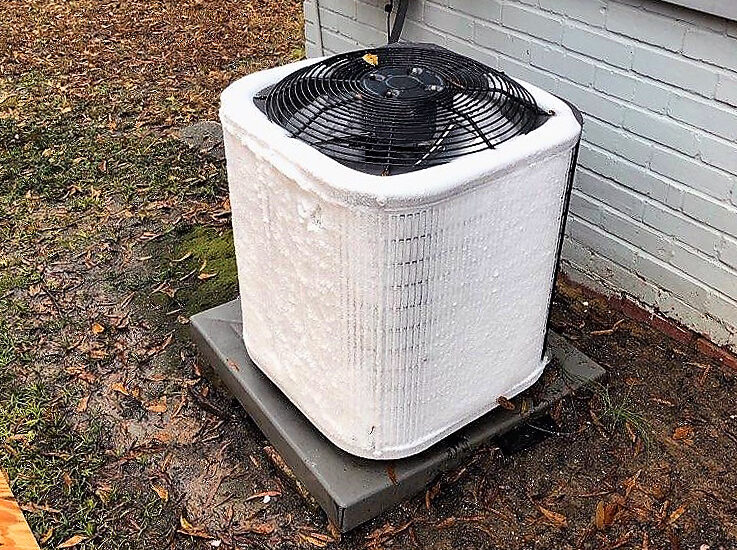
The type of system decides what our technician tests first, so tell us which one you have when you call. Gas furnace repairs usually involve the igniter, flame sensor, pressure switch, inducer motor, gas valve or limit switch: the parts that light the burners and shut them off safely. Heat pump repairs usually involve the reversing valve, defrost control, refrigerant charge, compressor or backup heat strips. Heat pumps also behave differently in winter: frost on the outdoor unit, long run times and “AUX” on the thermostat during a cold snap are usually normal heat pump behavior in cold weather, not a malfunction. If you’re not sure which you have, look outside: a heat pump’s outdoor unit runs in winter, while a furnace home’s outdoor unit sits still until spring.
What should you do if your heat goes out at night or on a weekend?
If your heat goes out after hours, check the thermostat and breaker, keep the house warm safely, and call us. Air Services of the Carolinas is on call 24/7, including nights, weekends and holidays. One customer called “on a cold, rainy Sunday morning and they came around 1:00pm, same day.” While you wait:
- If you smell gas, leave the house without flipping switches. Once you’re well away from it, call 911 and your gas company, and don’t go back in until they say it’s safe.
- If a carbon monoxide alarm sounds, get everyone outside and call 911.
- Hold the heat you have. Close doors to unused rooms and shut the blinds at night.
- Use space heaters carefully. Keep them at least 3 feet from anything that can burn, plug them straight into a wall outlet, and turn them off when you leave the room or go to bed.
- If a heat pump’s outdoor unit is iced solid, switch the thermostat to Emergency Heat until we get there.
When you call, tell us what the system is doing and whether a light is blinking.
What happens during a heating repair visit?
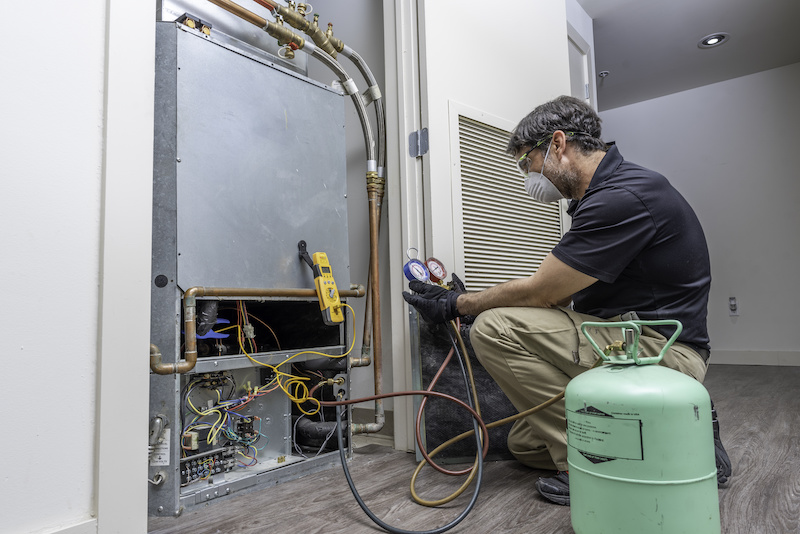
A heating repair visit starts with diagnosis. Our NATE-certified technician reads any fault codes, tests the electrical parts and safety controls, and checks airflow, the filter and the duct connections. On a furnace, that includes the igniter, flame sensor, pressure switch, inducer and venting. On a heat pump, it includes the defrost cycle, refrigerant pressures and sensors. We explain what we found and give you the price before any work begins, and you decide whether to go ahead. See our heating repair service for the systems we work on.
Should you repair or replace an older heating system?
Repair usually makes sense for a system under about 10 to 12 years old with one failed part. Replacement becomes the better conversation when the system is older, breakdowns are becoming a pattern, or a single repair approaches 30 to 40 percent of the cost of a new system. We’ll lay out both options with real numbers, including financing, and our heating installation page covers the equipment we install.
Frequently Asked Questions
What does a blinking light on my furnace mean?
A blinking status light is a fault code from the furnace’s control board. Count the pattern of blinks, turn the system off and call us. The code tells our technician where to start, such as a flame sensor, pressure switch or limit switch fault.
Is a short-cycling furnace dangerous?
Usually it’s a cost and wear problem, not a danger: the furnace burns more gas and its parts wear out sooner. The exception is short cycling caused by a blocked vent or a cracked heat exchanger, which can let combustion gases into the house. If you notice soot, an odd smell or a carbon monoxide alarm, turn the furnace off and call.
How can I keep my heating system from breaking down?
Change the filter every one to three months and have the system checked each fall. Air Services of the Carolinas’ Seasonal Maintenance Program is $189 a year for your first system and $139 for each additional one. Our guide to when to schedule heating maintenance covers what a fall visit checks.
Get your heat fixed
If your furnace is short cycling, your heat pump can’t keep up, or the heat is out, call (704) 309-6088 for Charlotte, Concord, Gastonia, Belmont, Steele Creek, Stanley and Denver, or (803) 628-2561 for Rock Hill, Fort Mill, Lake Wylie, Tega Cay and York. You can also request service online any time.
Related posts
 Air Conditioning
AC Running But Not Cooling in Charlotte & Rock Hill? What to Check and What It Costs
 Heat Pump
